Gummy supplements have exploded in popularity. They’re colourful, chewable, and taste more like sweets than vitamins — which is exactly why so many people prefer them. But here’s the big question: are gummy supplements actually effective?
The short answer: not as much as you might think. Let’s break down the issues with gummies — and why capsules are usually the better option.
🧬 The Downsides of Gummy Supplements
1. High Sugar Content
Check the label on most gummy vitamins, and you’ll see ingredients like glucose syrup, sucrose, or corn syrup at the top of the list. That means sugar makes up a significant portion of the gummy.
-
Taking them daily adds unnecessary sugar to your diet.
-
Sticky, sugary gummies can cling to teeth and contribute to cavities.
-
Sugar undermines the purpose of taking a “health” product in the first place.
2. Lower Nutrient Potency
Unlike capsules, gummies don’t have much space for active ingredients.
-
A single gummy may contain only a fraction of the nutrient dose you actually need.
-
To hit “meaningful” amounts, you often need to take several gummies a day, which means even more sugar.
-
Some brands underdose deliberately so the product tastes better and lasts longer.
3. Stability & Shelf Life
Gummy vitamins are more vulnerable to heat, light, and humidity than capsules.
-
Over time, nutrients can break down and lose potency.
-
Fat-soluble vitamins like A, D, E, and K are particularly unstable in gummy form.
-
That means by the time you take them, you may be getting far less than the label claims.
4. Additives & Fillers
To create the “gummy” texture and sweet taste, manufacturers use:
-
Gelatine (or pectin for vegan versions)
-
Artificial colours and flavourings
-
Glazing agents
-
Sweeteners and stabilisers
While these make gummies palatable, they don’t add nutritional value — they just bulk out the product.
5. Incomplete Formulas
Because gummies can’t fit much inside, they often skip important nutrients.
-
Many gummy multivitamins leave out minerals like iron, zinc, or magnesium altogether.
-
Others include them in such tiny amounts they won’t have a meaningful effect.
-
In short: they look like a multivitamin, but they don’t work like one.
🥦 The Alternative: Clean Capsules
Capsules solve many of these problems:
-
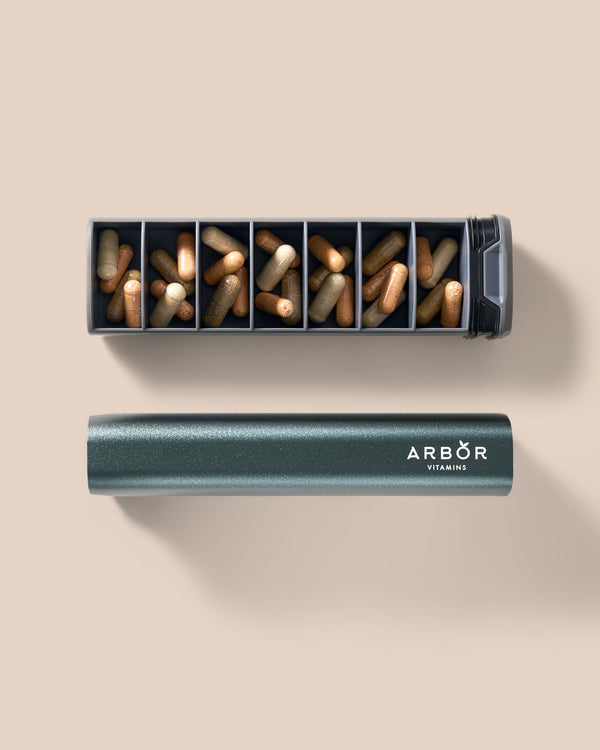
No sugar or artificial additives — just nutrients and a simple plant-based capsule shell.
-
Higher nutrient density — more room for meaningful doses of vitamins and minerals.
-
Better stability — capsules protect sensitive nutrients from heat and light.
-
Synergy built in — nutrients can be paired (or separated) for proper absorption.
🌟 Why TRINITY by Arbor Vitamins Wins Over Gummies
TRINITY is designed for absorption, not appearance:
-
❌ No sugar, syrups, or sweeteners
-
❌ No fillers, binders, or artificial additives
-
✅ Gentle, vegan-friendly capsules only
-
✅ High-dose nutrients like biotin (300 mcg, 600% NRV), iron bisglycinate, and magnesium glycinate
-
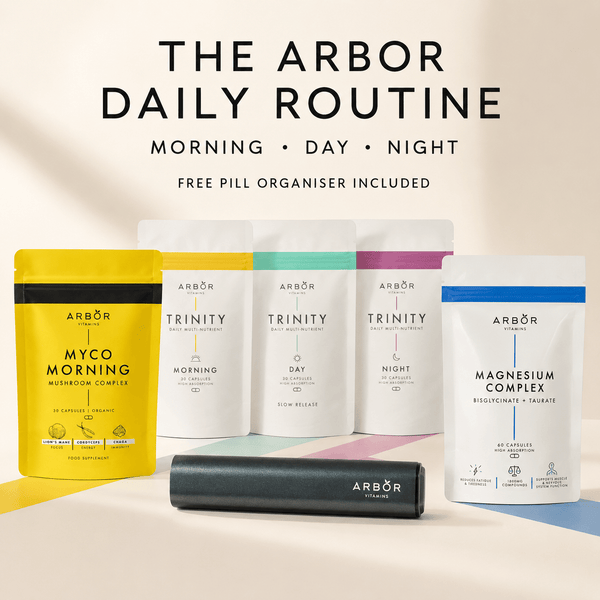
✅ Timed delivery: morning, day, and night formulas to match your body’s rhythm
-
✅ Nutrient synergy: avoiding clashes (like calcium + iron) that block absorption

🧠 Summary
Gummy supplements may look appealing, but they’re often more sugar than substance — with low potency, unstable nutrients, and incomplete formulas.
For meaningful health support, capsules are the better option. With TRINITY, you get clean, optimised nutrients — delivered when your body needs them most.
❓ FAQs: Gummy Supplements
Q: Do gummy vitamins work the same as capsules?
A: Not usually. They often contain lower doses and lose potency over time.
Q: Are gummy supplements bad for your teeth?
A: Yes — the sticky sugar can contribute to cavities if used daily.
Q: Why do gummies taste sweet?
A: Because sugar (like glucose or corn syrup) is usually one of the first listed ingredients.
Q: Can I replace my multivitamin with gummies?
A: Most gummies leave out key minerals like iron and zinc, so they’re rarely a complete substitute.
Q: What’s the healthier alternative?
A: Clean, filler-free capsules that prioritise absorption — like TRINITY.