Best Multivitamin with Esomeprazole (Nexium)
Quick Answer
Yes, most people can safely take a multivitamin with esomeprazole.
If you're taking esomeprazole long term, it's worth paying closer attention to your nutritional intake. Like other proton pump inhibitors (PPIs), esomeprazole reduces the amount of acid your stomach produces. Over time, this may reduce the absorption of certain nutrients in some people, particularly vitamin B12, magnesium, iron and calcium.
Taking esomeprazole doesn't automatically mean you need supplements. However, if you're considering a multivitamin, choosing one that's been thoughtfully formulated using high-quality, bioavailable ingredients can help support your long-term nutritional intake.
Pharmacist's Verdict
| Your Questions | Pharmacist Answers |
|---|---|
| Can I take a multivitamin with esomeprazole? | ✅ Yes |
| Can esomeprazole affect nutrient absorption? | ✅ Long-term use may affect vitamin B12, magnesium, iron and calcium in some people. |
| What should I look for in a multivitamin? | High-quality ingredients, bioavailable nutrient forms and a well-designed formulation. |
| Should I stop taking esomeprazole because of this? | ❌ No. Continue taking it as prescribed and discuss any concerns with your GP or pharmacist. |
Diagram 1: How esomeprazole reduces stomach acid and why this may influence the absorption of vitamin B12, magnesium, iron and calcium. 
In This Guide
-
Can you safely take a multivitamin with esomeprazole?
-
Which vitamins and minerals are most commonly discussed during long-term treatment.
-
How to choose a high-quality multivitamin.
-
When a dedicated magnesium supplement may be appropriate.
-
Which Arbor supplements may best suit your nutritional goals.
Why Can Esomeprazole Affect Vitamin and Mineral Absorption?
Esomeprazole works by reducing the amount of acid your stomach produces. It's commonly prescribed to treat acid reflux, stomach ulcers and gastro-oesophageal reflux disease (GORD).
Although stomach acid is often associated with digestion, it also helps release certain vitamins and minerals from food before they're absorbed by your body.
When stomach acid is reduced over a prolonged period, the absorption of some nutrients may become less efficient in some people. The nutrients most commonly discussed are:
-
Vitamin B12
-
Magnesium
-
Iron
-
Calcium
Most people taking esomeprazole continue to maintain healthy vitamin and mineral levels, particularly if they eat a balanced diet. However, if you're taking esomeprazole long term, it's sensible to review your nutritional intake and choose supplements carefully if you decide they're appropriate for you.
Table 2: Nutrients Commonly Discussed During Long-Term Esomeprazole Use
| Nutrient | Why it's discussed |
|---|---|
| Vitamin B12 | Stomach acid helps release vitamin B12 from food before it's absorbed. |
| Magnesium | Long-term PPI use has been associated with low magnesium levels in a small number of people. |
| Iron | Reduced stomach acid may make dietary iron harder to absorb in some individuals. |
| Calcium | Some evidence suggests calcium absorption may be reduced during long-term treatment. |
Which Vitamins and Minerals Are Most Commonly Affected?
The nutrients most commonly discussed during long-term esomeprazole treatment are vitamin B12, magnesium, iron and calcium.
Table 3: Key Nutrients at a Glance
| Nutrient | Why it's important | Why it's discussed with esomeprazole |
|---|---|---|
| Vitamin B12 | Supports the nervous system, red blood cell formation and energy metabolism. | Reduced stomach acid may make it harder to release vitamin B12 from food before it's absorbed. |
| Magnesium | Supports muscles, nerves, psychological function and energy production. | Long-term PPI use has been associated with low magnesium levels in a small number of people. |
| Iron | Helps transport oxygen around the body and contributes to the reduction of tiredness and fatigue. | Reduced stomach acid may affect iron absorption in some individuals. |
| Calcium | Supports the maintenance of normal bones and teeth. | Some studies suggest calcium absorption may be reduced during long-term treatment. |
Vitamin B12
Vitamin B12 has the strongest evidence linking it to long-term proton pump inhibitor (PPI) therapy.
Symptoms of a vitamin B12 deficiency can include:
-
Tiredness or fatigue
-
Pins and needles
-
Poor memory or concentration
-
Weakness
-
A sore tongue
If you're experiencing these symptoms, speak to your GP or pharmacist. They can advise whether further assessment or blood tests are appropriate.
Recommended Arbor Products
➡️ TRINITY – Provides vitamin B12 as methylcobalamin as part of a comprehensive daily multivitamin.
Magnesium
Low magnesium is an uncommon but recognised side effect of long-term PPI treatment.
If you're concerned about your magnesium intake, speak to your healthcare professional before starting supplementation.
Recommended Arbor Products
➡️ Magnesium Complex – A dedicated magnesium supplement containing magnesium bisglycinate and magnesium taurate.
➡️ TRINITY – Also provides magnesium as part of a comprehensive daily multivitamin.
Iron & Calcium
Reduced stomach acid may also influence the absorption of iron and calcium in some people, although the evidence is less consistent than for vitamin B12 and magnesium.
Maintaining a balanced diet remains the best way to support healthy iron and calcium intake. If you're concerned about your nutritional status, speak to your GP or pharmacist before starting supplements.
Recommended Arbor Products
➡️ TRINITY – Contains ferrous bisglycinate, calcium, vitamin D3 and vitamin K2 as part of its Morning and Day formulations.
Choosing the Right Multivitamin While Taking Esomeprazole
If you've decided to take a multivitamin alongside esomeprazole, it's worth looking beyond the label.
Many multivitamins appear similar at first glance, but the quality of the ingredients and the overall formulation can vary considerably.
When comparing products, consider:
-
The form of each nutrient – Some forms are better absorbed and utilised than others.
-
The overall formulation – A well-designed multivitamin considers how nutrients work together, rather than simply including as many ingredients as possible.
-
Appropriate nutrient levels – Higher doses aren't always better. Look for a balanced formulation designed for daily use.
-
Ingredient quality – Products made with premium ingredients and fewer unnecessary fillers are often worth prioritising.
Table 4: Choosing a High-Quality Multivitamin
| Consideration | Why it matters |
|---|---|
| Nutrient forms | Better-absorbed forms may support more effective nutrient utilisation. |
| Formulation | A thoughtful formulation considers nutrient interactions and compatibility. |
| Daily balance | A balanced formula is often more appropriate than excessive doses. |
| Ingredient quality | Premium ingredients can make a meaningful difference to the overall formulation. |
Why We Formulated TRINITY
As clinical pharmacists, we wanted to move away from the traditional one-a-day approach.
TRINITY is divided into Morning, Day and Night formulations, allowing nutrients to be grouped more thoughtfully throughout the day using premium, bioavailable ingredients.
Rather than focusing on packing the highest number of ingredients into a single capsule, our aim was to create a multivitamin based on formulation quality, ingredient selection and nutrient compatibility.

Recommended Product
➡️ TRINITY – A comprehensive daily multivitamin formulated by clinical pharmacists using premium, bioavailable ingredients.
Who Should Consider a Multivitamin While Taking Esomeprazole?
Esomeprazole doesn't automatically mean you need a multivitamin. However, some people may benefit from paying closer attention to their nutritional intake, particularly if they're taking the medicine for an extended period.
You may wish to consider a multivitamin if you:
-
Have been taking esomeprazole for several months or years.
-
Eat a restricted or unbalanced diet.
-
Frequently skip meals.
-
Are over the age of 65.
-
Take several long-term medications.
-
Have previously been diagnosed with a vitamin or mineral deficiency.
-
Have a condition that affects nutrient absorption.
If you're unsure whether a multivitamin is appropriate, speak to your GP or pharmacist. They can advise whether dietary changes, blood tests or supplementation are the most suitable next step.
Table 5: Is a Multivitamin Right for You?
| Your situation | What to consider |
|---|---|
| You've recently started esomeprazole | Continue focusing on a healthy, balanced diet. |
| You've been taking esomeprazole long term | Review your nutritional intake and consider a high-quality multivitamin. |
| Your diet is limited or inconsistent | A comprehensive multivitamin may help support your daily nutrient intake. |
| You're concerned about magnesium intake | A dedicated magnesium supplement may be appropriate. |
| You have symptoms of a possible deficiency | Speak to your GP or pharmacist before starting supplements. |
Recommended Arbor Products
Depending on your nutritional goals, you may find the following products helpful:
-
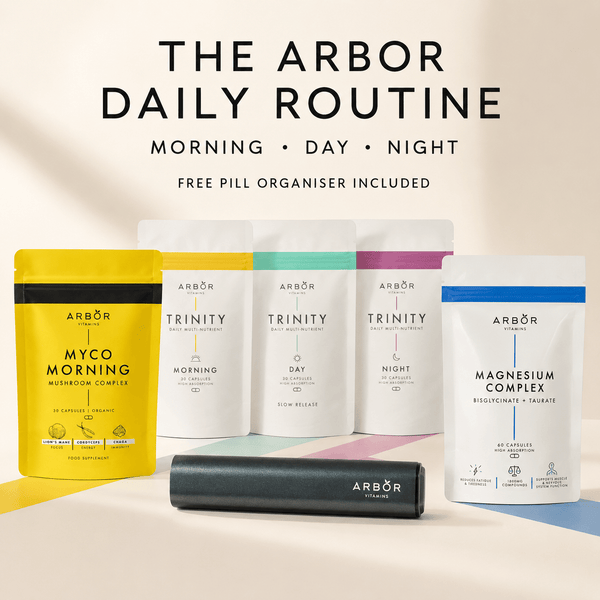
TRINITY – Comprehensive daily multivitamin formulated by clinical pharmacists.
-
Magnesium Complex – Dedicated magnesium supplement containing magnesium bisglycinate and magnesium taurate.
-
MYCO Morning – Organic mushroom blend for those looking to support focus and cognitive performance as part of their daily routine.
Frequently Asked Questions
Can I take a multivitamin with esomeprazole?
Yes. Most people can safely take a multivitamin while taking esomeprazole. If you're taking esomeprazole long term, choosing a high-quality multivitamin may help support your overall nutritional intake.
When should I take a multivitamin if I take esomeprazole?
Esomeprazole is usually taken at least 30–60 minutes before food. Many multivitamins are best taken with a meal, so they don't usually need to be taken at the same time. Follow the directions provided with both your medication and your supplement.
Does esomeprazole reduce vitamin absorption?
Long-term esomeprazole use has been associated with reduced absorption of certain nutrients in some people, particularly vitamin B12, magnesium, iron and calcium.
Which vitamins are most commonly discussed with esomeprazole?
The nutrients most commonly discussed are:
-
Vitamin B12
-
Magnesium
-
Iron
-
Calcium
Many people taking esomeprazole continue to maintain healthy vitamin and mineral levels through a balanced diet.
Can I take magnesium with esomeprazole?
Yes. Magnesium supplements can generally be taken alongside esomeprazole. If you're considering magnesium supplementation, speak to your GP or pharmacist if you have kidney disease or another condition affecting magnesium levels.
Does esomeprazole affect vitamin B12?
It can. Vitamin B12 has the strongest evidence linking it to long-term proton pump inhibitor (PPI) therapy because stomach acid helps release vitamin B12 from food before it's absorbed.
Does esomeprazole affect iron absorption?
It may. Reduced stomach acid can make dietary iron harder to absorb in some people, although many people taking esomeprazole continue to maintain healthy iron levels.
Can I take TRINITY with esomeprazole?
For most people, yes. TRINITY can generally be taken alongside esomeprazole as part of a healthy, balanced lifestyle.
Can I take Magnesium Complex with esomeprazole?
Yes. Magnesium Complex can generally be taken alongside esomeprazole. If you're unsure whether magnesium supplementation is appropriate for you, seek advice from your GP or pharmacist.
What is the best multivitamin to take with esomeprazole?
Look for a multivitamin that uses high-quality, bioavailable ingredients and has been thoughtfully formulated. A well-designed multivitamin focuses on ingredient quality, nutrient forms and formulation rather than simply the number of ingredients it contains.
When should I speak to my GP or pharmacist?
Arrange a review if you've been taking esomeprazole long term, have concerns about your nutritional intake, think you may have developed a vitamin or mineral deficiency, or are unsure whether supplementation is appropriate for you.
Further Reading
Continue exploring our pharmacist-written guides on medicines, nutrition and supplements.
Related Medicines
-
Best Multivitamin for Proton Pump Inhibitors (PPIs) (Coming Soon)
-
Best Multivitamin with Gastrointestinal Medicines (Coming Soon)
Vitamins & Minerals
-
Foods High in Vitamin B12
-
Foods High in Magnesium
-
Foods High in Iron
-
Foods High in Calcium
Supplement Guides
-
Do Mushroom Supplements Interact with Medications?
-
How to Choose a High-Quality Multivitamin (Coming Soon)
-
Bioavailable Vitamins Explained (Coming Soon)
References
This article has been medically reviewed using current clinical guidance and published evidence available at the time of writing.
-
British National Formulary (BNF). Esomeprazole.
-
National Institute for Health and Care Excellence (NICE). Gastro-oesophageal reflux disease and dyspepsia in adults: investigation and management.
-
NHS. Esomeprazole.
-
NHS. Vitamins and minerals.
-
Heidelbaugh JJ. Proton Pump Inhibitors and Risk of Vitamin and Mineral Deficiency: Evidence and Clinical Implications. Therapeutic Advances in Drug Safety.
-
Freedberg DE, Kim LS, Yang YX. The Risks and Benefits of Long-term Use of Proton Pump Inhibitors: Expert Review and Best Practice Advice. Gastroenterology.
-
European Food Safety Authority (EFSA). Authorised Health Claims for Vitamins and Minerals.