How to Choose a High-Quality Mushroom Supplement: A Pharmacist's Buying Guide
Quick Answer
The best mushroom supplement isn't necessarily the one with the highest dose or the most impressive marketing claims—it's the one that's transparent about what's inside.
A high-quality functional mushroom supplement should clearly state:
-
The mushroom species used.
-
Whether it contains fruiting body, mycelium or both.
-
How the mushrooms have been extracted.
-
Whether the product has been independently tested or standardised where appropriate.
-
Exactly what you're getting, without unnecessary fillers or vague proprietary blends.
With hundreds of mushroom supplements now available, comparing products can feel overwhelming. Terms such as "10:1 extract", "dual extraction", "100% fruiting body" and "beta-glucans" appear on almost every label—but they don't always tell the full story.
In this guide, we'll explain:
-
What separates a high-quality mushroom supplement from a poor one.
-
Which label claims genuinely matter.
-
The biggest marketing myths to ignore.
-
How to compare products with confidence.
At a Glance
| Question | Answer |
|---|---|
| What's the most important factor when choosing a mushroom supplement? | ✅ Transparency about ingredients, sourcing and manufacturing. |
| Is fruiting body always better than mycelium? | ❌ Not always. The quality of the finished product matters more than a single ingredient claim. |
| Does a higher extract ratio mean a better supplement? | ❌ Not necessarily. Extraction method and quality are usually more important. |
| Can you judge a supplement by the front of the label? | ❌ No. The most useful information is usually found in the ingredients, manufacturing details and supporting evidence. |
The 7 Things That Matter Most When Choosing a Mushroom Supplement
With so many brands making similar claims, it's easy to focus on the wrong things. In reality, a high-quality mushroom supplement is determined by a combination of factors, not just one headline claim.
Here's what to look for before you buy:
| What to Check | Why It Matters |
|---|---|
| 1. Mushroom species | Different mushrooms have different naturally occurring compounds and shouldn't be treated as interchangeable. |
| 2. Fruiting body or mycelium | Reputable brands should clearly state which part of the mushroom they're using—and why. |
| 3. Extraction method | The way mushrooms are extracted influences which naturally occurring compounds are present in the final extract. |
| 4. Transparent labelling | You should know exactly what's in the product, without vague proprietary blends or hidden ingredients. |
| 5. Quality testing | Independent testing and standardisation can provide greater confidence in the finished product. |
| 6. Unnecessary fillers | Simpler formulations with minimal fillers make it easier to understand what you're taking. |
| 7. Evidence over marketing | Scientific evidence and manufacturing transparency are far more important than impressive-sounding claims on the front of the pack. |
No single factor determines whether a mushroom supplement is "good" or "bad". Instead, it's the combination of sourcing, extraction, formulation and transparency that separates high-quality products from those that rely primarily on marketing.
In the following sections, we'll explain each of these factors in more detail and show you how to compare mushroom supplements like a pharmacist.
1. Start with the Right Mushroom
Before comparing extraction methods or ingredients, make sure you're choosing the right mushroom for your goal.
Different functional mushrooms contain different naturally occurring compounds and have been researched for different purposes. Choosing the wrong species simply because it's popular may not give you the product you're actually looking for.
| Mushroom | Commonly Studied For* |
|---|---|
| Lion's Mane (Hericium erinaceus) | Cognitive function, nerve health and brain health. |
| Cordyceps (Cordyceps militaris) | Energy metabolism, exercise performance and vitality. |
| Chaga (Inonotus obliquus) | Antioxidant activity and immune health. |
| Reishi (Ganoderma lucidum) | Immune function and general wellbeing. |
| Turkey Tail (Trametes versicolor) | Immune health and naturally occurring beta-glucans. |
*These mushrooms are being studied for these areas, but more high-quality human research is needed for many proposed benefits. Functional mushrooms are not medicines and shouldn't be used to diagnose, treat or prevent disease.
Pharmacist's Tip
A supplement isn't automatically better because it contains more mushrooms. In many cases, a well-formulated product containing a small number of carefully selected species is more transparent and easier to evaluate than one containing a long list of ingredients with undisclosed amounts.
Once you've chosen the right mushroom, the next step is understanding which part of the mushroom the supplement contains—and why that matters.
2. Check Whether It Uses Fruiting Body or Mycelium
One of the first things to look for on the label is which part of the mushroom the manufacturer has used.
Some supplements contain:
-
100% fruiting body
-
100% mycelium
-
A combination of both
Neither is automatically superior. Both fruiting body and mycelium contain naturally occurring compounds, and both have been investigated in scientific research. However, the quality and transparency of the finished ingredient are often more important than the part of the mushroom alone.
Where consumers should pay particular attention is how the mycelium has been produced. Some commercial mycelium products are grown on grain and harvested together with the growing substrate, meaning the finished ingredient may contain a significant proportion of starch alongside the fungal material.
A reputable manufacturer should clearly explain:
-
Which part of the mushroom has been used.
-
Why that choice was made.
-
How the ingredient was produced.
If this information isn't available, it's difficult to compare products objectively.
Want to learn more? Read our complete guide to Fruiting Body vs Mycelium, where we explore the science, common myths and what the evidence really says.
Now that you know which part of the mushroom you're buying, the next step is understanding how it has been extracted—one of the biggest factors influencing the quality of the final supplement.
3. Understand the Extraction Method
Mushrooms have tough cell walls made from chitin, so the way they're processed can influence the composition of the final extract.
A high-quality manufacturer should be transparent about how their mushrooms are extracted—not simply that they're "high strength" or "premium".
The most common extraction methods include:
| Method | Commonly Used For |
|---|---|
| Hot water extraction | Releasing water-soluble compounds such as beta-glucans. |
| Alcohol extraction | Extracting compounds that are less soluble in water, such as certain triterpenes. |
| Dual extraction | Combining hot water and alcohol extraction to produce a broader-spectrum extract where appropriate. |
| Ultrasonic-assisted extraction | Used alongside traditional extraction methods to improve extraction efficiency for certain mushrooms. |
The most important point is that there isn't one extraction method that's best for every mushroom. Reputable manufacturers choose the method that's appropriate for the mushroom species and explain why they've made that choice.
If a product simply says "mushroom extract" without any further information, it tells you very little about its quality.
Want to know more? Read our guide to Best Functional Mushroom Extraction Methods Explained, where we compare hot water, dual and ultrasonic-assisted extraction in detail.
Once you've looked at the extraction method, the next step is checking whether the manufacturer provides objective information about the quality of the finished extract—not just marketing claims.
4. Look Beyond the Marketing Claims
The front of a supplement packet is designed to grab your attention—not necessarily to help you compare quality.
Terms such as "maximum strength", "10:1 extract", "super potent" and "premium formula" may sound impressive, but on their own they tell you very little about the quality of the finished product.
Instead, turn the pack over and look for information that can actually be verified.
| Marketing Claim | What You Should Ask Instead |
|---|---|
| "10:1 Extract" | Does the manufacturer explain how the extract was produced and what it has been standardised to? |
| "Maximum Strength" | Maximum compared with what? Is there any evidence to support the claim? |
| "100% Natural" | Nearly all mushroom supplements are natural—this doesn't indicate quality. |
| "Organic" | A positive feature, but it doesn't automatically mean the extraction or formulation is superior. |
| "Premium" | What makes it premium? Look for objective evidence rather than marketing language. |
The Best Labels Answer Questions
A reputable manufacturer should make it easy to find:
-
The mushroom species (preferably using its Latin name).
-
Whether the product contains fruiting body, mycelium or both.
-
The extraction method used.
-
Independent testing or standardisation, where available.
-
A clear ingredients list without unnecessary fillers or proprietary blends.
As a general rule, the more transparent a company is about how its product is made, the easier it is to assess its quality. If important information is missing, it's worth asking why.
In the next section, we'll look at some of the biggest red flags to watch out for before buying a mushroom supplement.
5 Red Flags to Watch Out For
Not every mushroom supplement is created to the same standard. While no single factor determines quality, the following warning signs should make you look a little more closely before purchasing.
| 🚩 Red Flag | Why It Matters |
|---|---|
| The mushroom species isn't clearly stated. | Different mushrooms have different naturally occurring compounds and shouldn't be treated as interchangeable. |
| The label doesn't say whether it contains fruiting body or mycelium. | Transparency is important. You should know exactly which part of the mushroom you're buying. |
| The extraction method isn't explained. | Without this information, it's difficult to judge how the mushroom has been processed. |
| The product uses proprietary blends without individual ingredient amounts. | This makes it impossible to know how much of each mushroom you're actually getting. |
| The marketing makes bold health claims without supporting evidence. | Reputable manufacturers should explain the science rather than rely on exaggerated promises. |
Green Flags to Look For
On the other hand, high-quality mushroom supplements often have several things in common:
✅ The mushroom species is clearly identified.
✅ The manufacturer explains whether fruiting body, mycelium or both are used.
✅ The extraction method is transparent.
✅ The ingredients list is simple and easy to understand.
✅ The company provides evidence, sourcing information or quality testing where appropriate.
As a pharmacist, I'd always choose a product that is open about how it's made over one that relies on impressive marketing language. Transparency is often one of the strongest indicators of quality.
Pharmacist's Verdict
Choosing a high-quality mushroom supplement doesn't have to be complicated.
Rather than focusing on a single claim such as "100% fruiting body", "10:1 extract" or "maximum strength", look at the product as a whole.
Ask yourself:
-
Is the mushroom species clearly identified?
-
Does the manufacturer explain whether it uses fruiting body, mycelium or both?
-
Are the extraction methods transparent?
-
Does the company explain why it chose those methods?
-
Is the formulation supported by evidence rather than marketing claims?
A manufacturer that openly shares this information is usually far easier to trust than one that relies on buzzwords alone.
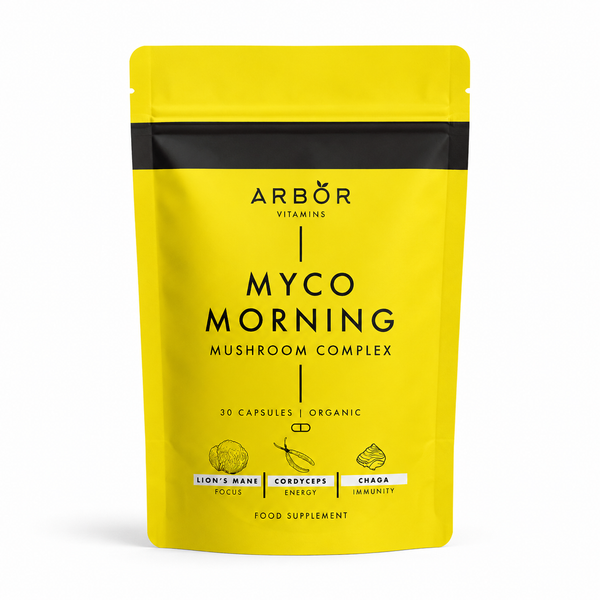
At Arbor Vitamins, that's the philosophy we follow when formulating MYCO Morning. We believe consumers should be able to understand what they're taking, how it's produced and why those ingredients were chosen. That's why we're transparent about the mushroom species we use, our extraction methods and our formulation approach, allowing you to make an informed decision with confidence.

The Bottom Line
The best mushroom supplement isn't necessarily the one with the biggest dose or the boldest claims—it's the one that combines high-quality ingredients, appropriate extraction methods, transparent manufacturing and evidence-based formulation.
If you use those principles to compare products, you'll be in a much stronger position to choose a supplement that's genuinely worth your money.
Frequently Asked Questions
What should I look for in a mushroom supplement?
Look for a supplement that clearly states the mushroom species, whether it contains fruiting body or mycelium, the extraction method used, and a transparent ingredients list. Independent quality testing is also a positive sign.
Is a higher mushroom dose always better?
Not necessarily. A higher dose doesn't automatically mean a better supplement. The mushroom species, extraction method, quality of the raw material and formulation are often just as important as the amount listed on the label.
Does "10:1 extract" mean it's a better product?
Not always. Extract ratios can be misleading if they're presented without context. It's more useful to understand how the extract was produced, whether it's standardised and whether the manufacturer explains its extraction process.
Should I choose fruiting body or mycelium?
Both can have a place in mushroom supplements. Rather than focusing on one or the other, look for brands that are transparent about which part of the mushroom they use and why they chose it.
Which extraction method is best?
There isn't one extraction method that's ideal for every mushroom. Hot water extraction, alcohol extraction, dual extraction and ultrasonic-assisted extraction all have their place depending on the mushroom species and the compounds being extracted.
Are organic mushroom supplements better?
Organic certification is a positive indicator of growing standards, but it doesn't guarantee a better-quality supplement. It's still important to consider the extraction method, formulation, transparency and manufacturing standards.
Do expensive mushroom supplements mean better quality?
Not always. Price alone isn't a reliable indicator of quality. Some premium-priced products provide excellent transparency and testing, while others rely heavily on marketing. Always compare what's actually disclosed on the label.
How can I tell if a mushroom supplement is high quality?
Choose products from manufacturers that are transparent about:
-
The mushroom species.
-
Fruiting body, mycelium or both.
-
Extraction methods.
-
Ingredient quantities.
-
Quality testing or standardisation where available.
Further Reading
If you'd like to learn more about functional mushrooms, explore our evidence-based guides:
Mushroom Quality
-
Fruiting Body vs Mycelium: What's the Difference?
-
Best Functional Mushroom Extraction Methods Explained
-
Do Mushroom Supplements Interact with Medications?
Individual Mushrooms
-
Lion's Mane Benefits: What Does the Evidence Say?
-
Chaga Benefits: What Does the Evidence Say?
-
Cordyceps Benefits: What Does the Evidence Say?
-
Reishi Benefits: What Does the Evidence Say?
Mushroom Safety
-
Lion's Mane and Sertraline: Can You Take Them Together?
-
Lion's Mane and ADHD Medication: Can You Take Them Together?
-
Chaga and Diabetes Medication: Can You Take Them Together?
References
-
European Food Safety Authority (EFSA). Scientific opinions relating to beta-glucans.
-
National Center for Complementary and Integrative Health (NCCIH). Medicinal Mushrooms.
-
Memorial Sloan Kettering Cancer Center. About Herbs: Medicinal Mushrooms.
-
Friedman M. Chemistry, Nutrition, and Health-Promoting Properties of Edible Mushrooms.
-
Wasser SP. Medicinal Mushrooms as a Source of Biologically Active Compounds.