Does Lion’s Mane Interact With Medications? What to Avoid
Lion’s Mane is not known to have a confirmed interaction with most commonly prescribed medicines, but the evidence is limited.
Very few human studies have been designed to test Lion’s Mane alongside specific medicines. Most concerns are based on laboratory research, animal studies or the mushroom’s proposed biological effects—not documented clinical interaction cases.
Extra caution is sensible if you take:
-
Blood thinners or antiplatelet medicines.
-
Insulin or medicines that can cause low blood sugar.
-
Immunosuppressants.
-
Several medicines for complex health conditions.
-
Medicines before planned surgery.
There is currently no good evidence that Lion’s Mane directly interacts with antidepressants, blood-pressure medicines, statins or metformin. However, an absence of published evidence does not prove that every Lion’s Mane extract is safe for every person.
Quick Interaction Guide
| Medicine or situation | What is known | Practical advice |
|---|---|---|
| Warfarin, apixaban, rivaroxaban and other anticoagulants | No confirmed human interaction, but one Lion’s Mane compound inhibited platelet aggregation in laboratory testing | Check with a pharmacist or doctor before combining |
| Aspirin, clopidogrel and other antiplatelets | A possible additive effect on bleeding is theoretical rather than clinically proven | Seek advice, particularly if you bruise or bleed easily |
| Metformin | No established direct interaction | Usually not considered a known combination to avoid, but monitor your response |
| Insulin, gliclazide and other glucose-lowering medicines | Animal and laboratory research suggests possible effects on blood glucose | Monitor glucose and seek advice where hypoglycaemia is possible |
| Sertraline, citalopram, fluoxetine and other antidepressants | No established direct interaction or evidence that Lion’s Mane causes serotonin syndrome | Do not replace or alter prescribed treatment; discuss new supplements if symptoms are unstable |
| Amlodipine and other blood-pressure medicines | No established direct interaction | Monitor for dizziness or unusually low readings |
| Statins | No established direct interaction | Check before use if you have liver disease or take several medicines |
| Immunosuppressants | Direct interaction studies are lacking, but mushroom compounds may influence immune activity | Avoid starting without advice from the specialist managing your treatment |
| Before surgery | A theoretical bleeding concern exists because of laboratory antiplatelet findings | Tell the surgical team about Lion’s Mane and follow their stopping instructions |
| Pregnancy or breastfeeding | Safety evidence is insufficient | Avoid unless a qualified healthcare professional advises otherwise |
What Does the Evidence Actually Show?
The most frequently cited bleeding concern comes from a laboratory study of hericenone B, a compound isolated from Lion’s Mane.
Researchers found that hericenone B inhibited collagen-induced platelet aggregation in human and rabbit platelets under laboratory conditions. This suggests a possible antiplatelet effect, but it does not show that an ordinary Lion’s Mane supplement causes clinically significant bleeding in people.
The distinction matters:
-
An isolated compound is not identical to a finished capsule or powder.
-
Laboratory concentrations may not reflect normal supplement exposure.
-
No clinical trial has established that Lion’s Mane increases bleeding when combined with warfarin, apixaban, aspirin or clopidogrel.
The evidence therefore supports caution, not a claim that a proven interaction definitely occurs.
Research into blood sugar is similarly preliminary. Lion’s Mane extracts have reduced glucose levels in diabetic rats, and individual mushroom compounds have demonstrated glucose-related activity in laboratory experiments. These findings have not established a predictable glucose-lowering effect in people taking metformin, insulin or other diabetes medicines.
Human Lion’s Mane studies have mainly investigated cognition, stress or mood. They have generally been small and were not designed to assess interactions with antidepressants, anticoagulants, blood-pressure treatment or other commonly prescribed medicines.
Does the Type of Lion’s Mane Product Matter?
Yes.
“Lion’s Mane” products can differ considerably in:
-
Whether they use fruiting body, mycelium or both.
-
Whether the material is extracted or simply powdered.
-
Extract concentration.
-
Daily dose.
-
Levels of beta-glucans and other compounds.
-
Additional mushrooms, herbs or stimulants in the formula.
-
Independent testing and manufacturing standards.
This means the interaction risk cannot always be judged from the words Lion’s Mane on the front of the packet.
A single-species capsule is easier to assess than a gummy, coffee or “nootropic” blend containing several mushrooms, caffeine and herbal ingredients. When checking compatibility with medication, read the complete ingredient list rather than focusing only on the headline mushroom.
Does Lion’s Mane Interact With Blood Thinners?
There is no confirmed clinical interaction between Lion’s Mane and anticoagulants or antiplatelet medicines. However, caution is sensible because laboratory research suggests that one isolated Lion’s Mane compound may affect platelet aggregation.
“Blood thinner” is an informal term that includes two different medicine groups:
-
Anticoagulants, such as warfarin, apixaban, rivaroxaban, edoxaban and dabigatran.
-
Antiplatelets, such as aspirin, clopidogrel and ticagrelor.
These medicines already increase bleeding risk. Even a theoretical additional antiplatelet effect deserves consideration, particularly in someone taking more than one medicine that affects clotting.
Can You Take Lion’s Mane With Warfarin?
Warfarin has a narrow therapeutic range and is monitored using an INR blood test. Changes in medicines, supplements, diet and health can affect anticoagulation control, so new supplements should be discussed with the anticoagulation clinic or a pharmacist before they are started.
There is no evidence showing that Lion’s Mane directly changes INR or alters warfarin metabolism. The concern instead comes from a laboratory study in which hericenone B, isolated from Lion’s Mane, inhibited collagen-induced platelet aggregation. This was not a study of people taking Lion’s Mane supplements alongside warfarin.
The safest advice is therefore:
-
Do not stop or change warfarin because you want to take Lion’s Mane.
-
Check with your anticoagulation clinic before starting it.
-
Tell the clinic the exact product, dose and full ingredient list.
-
Report unusual bruising or bleeding.
-
Avoid assuming that a normal INR rules out every possible bleeding effect.
A mushroom blend may be harder to assess than a single-species Lion’s Mane product because other mushrooms or added herbs may have separate interaction concerns.
Can You Take Lion’s Mane With Eliquis or Apixaban?
There is no established direct interaction between Lion’s Mane and apixaban, sold under the brand name Eliquis.
Unlike warfarin, apixaban is not routinely adjusted using an INR test. This means the absence of an abnormal INR would not be a useful way to assess whether a supplement is affecting bleeding risk.
NHS guidance advises people taking apixaban to tell their doctor or pharmacist about vitamins, herbal remedies and supplements because some products may increase bleeding or alter how the medicine works.
Seek individual advice before combining Lion’s Mane with apixaban if you:
-
Have previously had a stomach ulcer or internal bleed.
-
Have significant kidney or liver disease.
-
Take aspirin, clopidogrel or an anti-inflammatory medicine as well.
-
Bruise or bleed easily.
-
Are using a multi-mushroom or herbal blend.
-
Are due to have surgery or a dental procedure.
The same cautious approach applies to rivaroxaban, edoxaban and dabigatran. There are no established Lion’s Mane-specific interactions, but people taking an anticoagulant should check unfamiliar supplements before use.
Can You Take Lion’s Mane With Aspirin or Clopidogrel?
No human study has established that Lion’s Mane increases bleeding when combined with aspirin or clopidogrel.
However, both medicines reduce platelet activity. Because hericenone B demonstrated an antiplatelet effect in laboratory testing, combining Lion’s Mane with prescribed antiplatelet treatment should be approached cautiously rather than assumed to be risk-free.
This is particularly relevant when someone takes:
-
Aspirin and clopidogrel together.
-
An antiplatelet plus an anticoagulant.
-
Regular ibuprofen or another NSAID.
-
Several supplements that may affect bleeding.
Do not stop prescribed aspirin or clopidogrel without medical advice. Check the Lion’s Mane product with a pharmacist and make sure they know about every medicine and supplement you use.
Should You Stop Lion’s Mane Before Surgery?
Tell your surgeon, anaesthetist or pre-operative team that you take Lion’s Mane.
There is no evidence-based universal stopping period for Lion’s Mane. The correct advice depends on:
-
The type of procedure.
-
Your bleeding risk.
-
Whether you use an anticoagulant or antiplatelet medicine.
-
The Lion’s Mane dose and formulation.
-
Other ingredients in the product.
Follow the surgical team’s instructions rather than choosing an arbitrary stopping period yourself.
Does Lion’s Mane Interact With Diabetes Medication?
There is no established direct interaction between Lion’s Mane and commonly used diabetes medicines.
The concern is theoretical because aqueous Lion’s Mane extract reduced blood glucose in diabetic rats during a 28-day experiment. This does not prove that a normal human supplement dose lowers blood glucose—or that it causes hypoglycaemia when combined with diabetes treatment.
The practical risk differs according to the medicine being taken.
Can You Take Lion’s Mane With Metformin?
There is no known direct interaction between Lion’s Mane and metformin.
Metformin does not usually cause hypoglycaemia when taken by itself. The likelihood of low blood sugar is greater when it is combined with medicines such as insulin or gliclazide.
Someone taking metformin alone would not generally be expected to develop a hypo solely because they added Lion’s Mane. However:
-
Human interaction studies are lacking.
-
Multi-ingredient mushroom products may contain other glucose-active ingredients.
-
Diabetes control can change for reasons unrelated to the supplement.
-
Kidney, liver and gastrointestinal problems may affect suitability.
Monitor your usual readings where advised and speak to your diabetes team if they change unexpectedly.
Lion’s Mane With Insulin or Gliclazide
Extra care is appropriate with medicines that can directly cause low blood glucose, particularly:
-
Insulin.
-
Gliclazide.
-
Glimepiride.
-
Glipizide.
-
Repaglinide.
Insulin and sulfonylureas such as gliclazide are established causes of hypoglycaemia.
It has not been shown that Lion’s Mane meaningfully adds to this effect in humans. Nevertheless, because animal research suggests possible glucose-lowering activity, someone using these medicines should avoid starting a concentrated extract without considering glucose monitoring and individual advice.
Possible signs of a hypo include:
-
Sweating.
-
Shaking.
-
Hunger.
-
Dizziness.
-
Palpitations.
-
Irritability or confusion.
-
Blurred vision.
A blood glucose reading below 4 mmol/L is generally treated as hypoglycaemia. Follow the treatment plan provided by your diabetes team and seek urgent help for severe symptoms or loss of consciousness.
Do not reduce prescribed diabetes medication simply because you start taking Lion’s Mane.
Does Lion’s Mane Interact With Antidepressants?
There is currently no established direct interaction between Lion’s Mane and commonly prescribed antidepressants, including:
-
Sertraline.
-
Citalopram.
-
Fluoxetine.
-
Escitalopram.
-
Venlafaxine.
-
Duloxetine.
-
Mirtazapine.
-
Amitriptyline.
However, this does not mean the combination has been thoroughly studied.
The available human trials of Lion’s Mane have generally assessed the mushroom as a standalone intervention or compared it with placebo. They were small and were not designed to test its safety alongside SSRIs, SNRIs, tricyclic antidepressants or other psychiatric medicines.
Can You Take Lion’s Mane With Sertraline?
There is no evidence that Lion’s Mane directly alters sertraline levels or prevents the medicine from working.
Lion’s Mane is also not known to act as a conventional serotonergic medicine, and there is currently no clinical evidence that combining it with sertraline causes serotonin syndrome.
That said, sertraline can affect platelet function and may increase bleeding risk, particularly when combined with anticoagulants, aspirin, anti-inflammatory medicines or other substances that affect platelets. Because one isolated Lion’s Mane compound has demonstrated an antiplatelet effect in laboratory testing, extra caution is reasonable where several bleeding-risk factors are present.
Check with a pharmacist before combining Lion’s Mane and sertraline if you:
-
Take warfarin, apixaban or another anticoagulant.
-
Use aspirin, clopidogrel or regular NSAIDs.
-
Have a history of stomach ulcers or abnormal bleeding.
-
Bruise easily.
-
Are preparing for surgery.
-
Take several supplements or herbal products.
For a more detailed discussion, read our guide to Lion’s Mane and sertraline: can you take them together?
Lion’s Mane With Citalopram or Fluoxetine
There is likewise no confirmed direct interaction between Lion’s Mane and citalopram or fluoxetine.
Citalopram product information warns about combining the medicine with genuinely serotonergic substances, such as certain opioids, triptans, tryptophan and St John’s wort. Lion’s Mane is not currently listed among these established serotonergic interactions.
It is important not to assume that an early laboratory finding or a claim that Lion’s Mane “supports mood” means that it increases serotonin in the same way as an antidepressant.
One small four-week trial reported possible improvements in some measures of anxiety and low mood, but it involved only 30 women and did not establish a serotonin-based mechanism or assess interactions with antidepressant medication.
Could Lion’s Mane Cause Serotonin Syndrome?
There is currently no published clinical evidence showing that Lion’s Mane causes serotonin syndrome by itself or when combined with an antidepressant.
Serotonin syndrome is a potentially serious reaction associated with excessive serotonergic activity. Symptoms can include:
-
Agitation or confusion.
-
Sweating.
-
Tremor.
-
Muscle rigidity or twitching.
-
Diarrhoea.
-
Fever.
-
A rapid heartbeat.
-
Changes in blood pressure.
The established risk is associated with combinations of serotonergic medicines and supplements—not simply with any product marketed for mood or cognition. Citalopram and sertraline product information identifies recognised serotonergic medicines but does not identify Lion’s Mane as one of them.
Seek urgent medical advice if symptoms suggestive of serotonin syndrome develop, particularly after a prescribed medicine has been started or its dose has changed.
Do not stop an antidepressant suddenly because you wish to start Lion’s Mane. Abruptly stopping antidepressants can cause withdrawal symptoms and may lead to a return of the condition being treated.
Does Lion’s Mane Interact With Blood-Pressure Medication?
No direct interaction has been established between Lion’s Mane and common blood-pressure medicines such as:
-
Amlodipine.
-
Ramipril.
-
Losartan.
-
Candesartan.
-
Bisoprolol.
-
Bendroflumethiazide.
There is also not enough reliable human evidence to conclude that ordinary Lion’s Mane supplementation meaningfully lowers blood pressure.
Can You Take Lion’s Mane With Amlodipine?
Lion’s Mane is not listed as a recognised amlodipine interaction, but supplements have not been tested as extensively as licensed medicines.
Amlodipine itself can cause dizziness, weakness and low-blood-pressure symptoms in some people. The NHS recommends telling a doctor or pharmacist about any supplements taken alongside it.
A sensible approach is to:
-
Continue taking amlodipine exactly as prescribed.
-
Introduce only one new supplement at a time.
-
Monitor blood pressure if you already check it at home.
-
Stop the supplement and seek advice if you develop persistent dizziness, fainting or unusually low readings.
-
Check the full formula for other ingredients that may affect blood pressure.
The risk may be harder to assess with “focus” or mushroom blends containing caffeine, ginseng, rhodiola or other stimulating herbs.
Does Lion’s Mane Interact With Statins?
There is no established direct interaction between Lion’s Mane and atorvastatin, simvastatin or rosuvastatin.
However, people taking statins should check multi-ingredient supplements carefully. Some herbal ingredients can affect statin metabolism, and unexplained muscle pain, weakness or dark urine should not be dismissed as a supplement adjustment effect.
The NHS advises people taking atorvastatin to disclose vitamins, herbal remedies and supplements, particularly because recognised interactions exist with products such as St John’s wort and several prescribed medicines.
Seek advice before using Lion’s Mane if you:
-
Have existing liver disease.
-
Have previously developed statin-related muscle problems.
-
Take several medicines that interact with your statin.
-
Are using a complex mushroom or nootropic blend rather than Lion’s Mane alone.
Lion’s Mane, Immunosuppressants and Autoimmune Conditions
People taking immunosuppressant treatment should not start Lion’s Mane without speaking to the specialist managing their condition.
Lion’s Mane contains polysaccharides, including beta-glucans, that have demonstrated effects on immune cells in laboratory research. One isolated Lion’s Mane beta-glucan stimulated lymphocyte proliferation and cytokine production in experimental models. This does not prove that a commercial Lion’s Mane supplement will counteract an immunosuppressant in a patient, but it provides a reasonable basis for caution.
Relevant medicines may include:
-
Tacrolimus.
-
Ciclosporin.
-
Azathioprine.
-
Mycophenolate.
-
Methotrexate.
-
Biologic medicines.
-
Long-term or high-dose corticosteroids.
The concern is not that a clinically significant interaction has been confirmed. It is that the combination has not been adequately studied and the consequences of destabilising transplant or autoimmune treatment could be serious.
The same principle applies to conditions such as multiple sclerosis, rheumatoid arthritis, lupus, inflammatory bowel disease and autoimmune thyroid disease. Having an autoimmune condition does not automatically mean Lion’s Mane is unsafe, but suitability should be assessed individually rather than assumed from general “immune support” marketing.
Do Lion’s Mane Gummies Interact Differently From Capsules or Powders?
No. The format does not remove the possibility of an interaction.
A Lion’s Mane gummy, capsule, powder, tincture or coffee may all contain the same headline mushroom. What matters more is:
-
The amount of Lion’s Mane provided.
-
Whether it is an extract or unextracted powder.
-
The serving size.
-
Whether other mushrooms or herbal ingredients are included.
-
Whether the product contains caffeine or stimulants.
-
Your medicines and medical conditions.
Gummies can sometimes be harder to assess because the front label may promote a mushroom “blend” without clearly displaying how much of each mushroom is included.
They may also contain additional ingredients such as:
-
Ashwagandha.
-
Rhodiola.
-
Ginseng.
-
Green tea or caffeine.
-
Vitamins and minerals.
-
Other functional mushrooms.
Any interaction may therefore come from another ingredient rather than Lion’s Mane itself.
The same applies to mushroom coffee. Adding Lion’s Mane to coffee does not necessarily create a new Lion’s Mane interaction, but caffeine may affect anxiety, sleep, heart rate or blood pressure and can interact with some medicines independently.
Are Lion’s Mane Blends More Likely to Interact?
Not necessarily, but they are more complicated to assess.
Most available interaction evidence concerns one ingredient and one conventional medicine. Once a supplement contains several mushrooms, herbs or nutrients, it becomes harder to predict the combined effect. NHS Specialist Pharmacy Service guidance recommends checking the complete formulation, strength and total daily dose because products with similar names may contain very different ingredients.
For example, a blend containing Lion’s Mane, Reishi, Chaga and Cordyceps should not be assessed solely as a Lion’s Mane product. Each mushroom may have separate theoretical concerns involving:
-
Blood clotting.
-
Blood glucose.
-
Immune activity.
-
Liver or kidney function.
-
Other prescribed medicines.
This does not mean that all multi-mushroom products are unsafe. It means a confident answer requires the full ingredient list rather than the product name alone.
Who Should Check Before Taking Lion’s Mane?
Speak to a pharmacist, doctor or the healthcare professional managing your treatment before starting Lion’s Mane if you:
-
Take warfarin, apixaban or another anticoagulant.
-
Take aspirin, clopidogrel or more than one medicine affecting bleeding.
-
Use insulin, gliclazide or another medicine capable of causing hypoglycaemia.
-
Take an immunosuppressant.
-
Have received an organ transplant.
-
Have an autoimmune condition under specialist care.
-
Have significant liver or kidney disease.
-
Take a medicine with a narrow safety margin, such as warfarin, ciclosporin, digoxin or lithium.
-
Are awaiting surgery.
-
Are pregnant or breastfeeding.
-
Have a known mushroom allergy.
-
Take several medicines or complementary products.
NHS medicines guidance advises particular caution with complementary products in people who are pregnant or breastfeeding, have high-risk medical conditions, take medicines with narrow therapeutic ranges, or are preparing for surgery. It also notes that evidence about interactions is often limited and based on theoretical mechanisms or case reports.
Do not stop, reduce or replace prescribed treatment in order to take Lion’s Mane.
Can You Take Lion’s Mane During Pregnancy or Breastfeeding?
There is not enough reliable evidence to establish the safety of Lion’s Mane supplements during pregnancy or breastfeeding.
Eating ordinary culinary mushrooms as part of the diet is not the same as taking a concentrated mushroom extract every day.
Because the developing baby or breastfed infant may be more vulnerable—and suitable dosing has not been established—it is sensible to avoid Lion’s Mane supplements unless a doctor, pharmacist or midwife advises otherwise. NHS guidance notes that there is insufficient information to guarantee the safety of herbal and complementary remedies during breastfeeding.
What Side Effects Should You Look Out For?
Lion’s Mane appears to be tolerated by many people, but human safety data remain limited and products vary.
Possible reactions may include:
-
Stomach discomfort.
-
Nausea.
-
Loose stools.
-
Itching.
-
A skin rash.
-
An allergic reaction.
Stop taking the product and seek urgent medical help if you develop:
-
Swelling of the lips, tongue, face or throat.
-
Difficulty breathing.
-
Wheezing.
-
A widespread or rapidly worsening rash.
-
Fainting or severe dizziness.
Someone with an existing mushroom allergy should avoid experimenting with Lion’s Mane without professional advice.
How to Check a Lion’s Mane Product
Before combining any Lion’s Mane supplement with medication, check:
1. The complete ingredients
Do not rely only on the product name. Look for other mushrooms, herbs, caffeine, vitamins and minerals.
2. The actual daily amount
Check how much Lion’s Mane is supplied in the full recommended daily serving—not simply the total weight of a proprietary blend.
3. The form used
Look for clear information about whether the product contains:
-
Fruiting body.
-
Mycelium.
-
Unextracted mushroom powder.
-
A concentrated extract.
-
A combination of these.
4. The extraction ratio
A 1:1 extract and a highly concentrated extract are not directly equivalent. Greater concentration does not automatically mean better, but it may affect the dose of mushroom compounds being consumed.
5. Testing and traceability
Look for a named manufacturer, batch information, clear sourcing and appropriate contaminant testing.
Testing and organic certification do not eliminate the possibility of medicine interactions. They do, however, make it easier to understand what you are actually taking.
Our Choice is MYCO Morning?

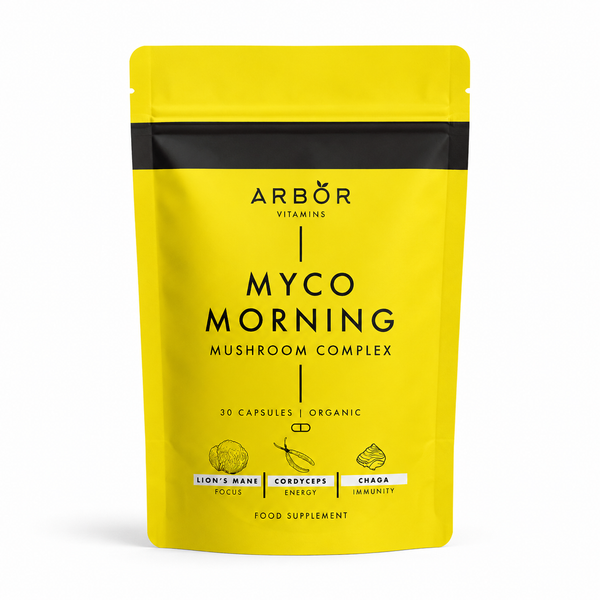
MYCO Morning combines organic extracts of Lion’s Mane, Cordyceps and Chaga in one caffeine-free capsule-based formula, providing 578 mg of mushroom extracts per capsule.
Because it contains three mushrooms, its suitability should be assessed using the complete formula rather than considering Lion’s Mane alone.
For most healthy adults who do not take interacting medicines, this provides a straightforward alternative to managing several separate mushroom products. However, speak to a pharmacist or doctor before using MYCO Morning if you take anticoagulants, glucose-lowering medicines or immunosuppressants, or if you are pregnant, breastfeeding or preparing for surgery.
A transparent formula makes a product easier to assess. It does not make individual medical advice unnecessary.
Frequently Asked Questions
Can You Take Lion’s Mane Every Day?
Many Lion’s Mane products are intended for daily use, and human studies have administered it regularly for several weeks without identifying major safety concerns.
However, the studies have generally been small and have not tested every extract, dose or medicine combination. Follow the product’s recommended serving and stop taking it if you develop a suspected adverse reaction.
People taking anticoagulants, glucose-lowering medicines or immunosuppressants should check suitability before using Lion’s Mane regularly.
Can You Take Lion’s Mane With Warfarin?
Do not start Lion’s Mane without checking with your anticoagulation clinic, doctor or pharmacist.
There is no evidence that Lion’s Mane directly changes INR. The concern comes from laboratory research showing that an isolated Lion’s Mane compound inhibited platelet aggregation. It has not been established that ordinary Lion’s Mane supplements produce the same effect in people.
Warfarin has a narrow safety margin, and NHS Specialist Pharmacy Service guidance advises particular caution with complementary products in people taking medicines such as warfarin.
Can You Take Lion’s Mane With Eliquis or Apixaban?
There is no confirmed direct interaction between Lion’s Mane and apixaban.
However, apixaban already increases bleeding risk, and Lion’s Mane has not been adequately studied alongside it. Seek individual advice before combining them, particularly if you also take aspirin, clopidogrel or an anti-inflammatory medicine, or have previously experienced abnormal bleeding.
Can You Take Lion’s Mane With Metformin?
There is no established direct interaction between Lion’s Mane and metformin.
Animal research has reported glucose-lowering effects from a Lion’s Mane extract, but this does not demonstrate that ordinary supplement doses cause hypoglycaemia in humans.
Metformin used alone does not commonly cause low blood glucose. Greater caution is appropriate when Lion’s Mane is combined with insulin, gliclazide or another medicine capable of causing hypoglycaemia.
Can You Take Lion’s Mane With Amlodipine?
No direct interaction has been established between Lion’s Mane and amlodipine.
Introduce the supplement cautiously and monitor your usual blood-pressure readings where appropriate. Stop taking it and seek advice if you develop persistent dizziness, fainting or unusually low readings.
Check for other ingredients as well. Mushroom coffees and nootropic blends may contain caffeine, ginseng or other substances that affect blood pressure independently of Lion’s Mane.
Can You Take Lion’s Mane With Sertraline?
There is no established direct interaction between Lion’s Mane and sertraline, and Lion’s Mane has not been shown to cause serotonin syndrome.
The combination has not been properly examined in clinical interaction studies, however. Extra caution is sensible if you also use anticoagulants, antiplatelets or regular anti-inflammatory medicines because sertraline itself can contribute to bleeding risk.
Do not stop or reduce sertraline in order to take Lion’s Mane.
Can You Take Lion’s Mane With Citalopram or Fluoxetine?
There is no confirmed direct interaction between Lion’s Mane and citalopram or fluoxetine.
Claims that Lion’s Mane may support mood do not mean it acts like an SSRI or predictably increases serotonin. Small human studies have examined cognition and mood, but they were not designed to assess combinations with antidepressant medicines.
Discuss any new supplement with a pharmacist or prescriber when your mental-health symptoms are unstable or your antidepressant has recently been started or changed.
Can You Take Lion’s Mane With Statins?
There is no established direct interaction between Lion’s Mane and atorvastatin, simvastatin or rosuvastatin.
Check the full formulation because additional herbs may have separate interaction concerns. Seek medical advice for unexplained muscle pain, marked weakness, yellowing of the skin or dark urine rather than assuming these symptoms are a normal response to a supplement.
How Long Should You Separate Lion’s Mane From Medication?
There is no universal spacing period.
Leaving two or four hours between Lion’s Mane and a medicine does not necessarily prevent an interaction involving:
-
Blood clotting.
-
Blood glucose.
-
Immune activity.
-
Liver metabolism.
-
Additive side effects.
Spacing is useful only when a specific absorption interaction is known. For most Lion’s Mane concerns, the more important question is whether the combination is suitable at all.
Should You Stop Lion’s Mane Before Surgery?
Tell the pre-operative team about Lion’s Mane and every other supplement you use.
NHS Specialist Pharmacy Service guidance advises discontinuing complementary products at least two weeks before planned surgery as a general precaution because some may affect bleeding, cardiovascular stability, electrolytes, the liver, kidneys or anaesthesia. Follow the instructions given by your own surgical team, as they may recommend a different approach.
Do not stop prescribed anticoagulants or antiplatelet medicines unless the surgical team specifically tells you to do so.
Does Cooking Lion’s Mane Have the Same Interaction Risk as a Supplement?
Eating Lion’s Mane as an occasional food is not directly equivalent to taking a concentrated extract every day.
Supplements may provide larger and more consistent quantities of selected mushroom compounds. Interaction advice aimed at concentrated extracts should therefore not automatically be applied to a normal portion of cooked mushroom—or dismissed because the mushroom can also be eaten as food.
Can a Pharmacist Check Lion’s Mane Against My Medication?
Yes, but provide:
-
The exact product name.
-
A photograph or copy of the full ingredients.
-
The amount taken each day.
-
Every prescribed and over-the-counter medicine you use.
-
Any other supplements.
-
Relevant medical conditions.
Products with similar names can contain different mushroom species, strengths and additional ingredients. NHS Specialist Pharmacy Service guidance stresses that the complete formulation and total daily dose are needed when assessing complementary products.
Key Takeaways
-
Lion’s Mane has no confirmed direct interaction with most commonly prescribed medicines.
-
Interaction research in humans is extremely limited.
-
Laboratory evidence suggests a possible antiplatelet effect, but clinically significant bleeding has not been demonstrated.
-
Animal research suggests possible effects on blood glucose, but this has not been confirmed in people.
-
Extra caution is appropriate with anticoagulants, antiplatelets, insulin, sulfonylureas and immunosuppressants.
-
There is no evidence that Lion’s Mane causes serotonin syndrome when combined with an antidepressant.
-
Gummies, coffees and blends are not automatically safer than capsules.
-
The full formula, dose and other medicines matter more than the format.
-
No published interaction does not necessarily mean no interaction is possible.
Pharmacist’s Verdict
For a generally healthy adult taking no regular medication, Lion’s Mane is unlikely to present a major interaction concern when used at the recommended serving.
The decision becomes less straightforward when someone takes medicines affecting:
-
Blood clotting.
-
Blood glucose.
-
Immune function.
-
Medicines with a narrow safety margin.
In these situations, the evidence rarely supports saying that a dangerous interaction will definitely happen. It also does not support confidently declaring the combination completely safe.
Use a clearly labelled product, avoid unnecessarily complicated blends and check the complete formula with a pharmacist where your medication makes an interaction clinically important.
MYCO Morning combines transparent amounts of Lion’s Mane, Cordyceps and Chaga in a caffeine-free capsule formula. Because it contains three functional mushrooms, check the complete blend—not Lion’s Mane alone—against your medication before use.
Related Guides
-
Do Mushroom Supplements Interact With Medications? What to Avoid
-
Lion’s Mane and Sertraline: Can You Take Them Together?
-
Can You Take Mushroom Supplements With Antidepressants?
-
Chaga and Diabetes Medication: Can You Take Them Together?
-
When Is the Best Time to Take Functional Mushrooms?
-
Fruiting Body vs Mycelium: Which Mushroom Supplement Is Better?
-
How Functional Mushroom Extraction Methods Work
Selected References
-
Mori K, Inatomi S, Ouchi K, Azumi Y, Tuchida T. Improving effects of the mushroom Yamabushitake (Hericium erinaceus) on mild cognitive impairment: a double-blind, placebo-controlled clinical trial. Phytotherapy Research. 2009;23(3):367–372.
-
Mori K, Obara Y, Moriya T, et al. Nerve growth factor-inducing activity of Hericium erinaceus in 1321N1 human astrocytoma cells. Biological & Pharmaceutical Bulletin. 2008;31(9):1727–1732.
-
Mori K, Kikuchi H, Obara Y, et al. Inhibitory effect of hericenone B from Hericium erinaceus on collagen-induced platelet aggregation. Phytomedicine. 2010;17(14):1082–1085.
-
Liang B, Guo Z, Xie F, Zhao A. Antihyperglycaemic and antihyperlipidaemic activities of aqueous extract of Hericium erinaceus in experimental diabetic rats. BMC Complementary and Alternative Medicine. 2013;13:253.
-
Nagano M, Shimizu K, Kondo R, et al. Reduction of depression and anxiety by four weeks of Hericium erinaceus intake. Biomedical Research. 2010;31(4):231–237.
-
Specialist Pharmacy Service. Advising on complementary products and conventional medicines.
-
Specialist Pharmacy Service. Managing complementary products and conventional medicines.
-
NHS. Anticoagulants: considerations and interactions.
About the Author
Written by Jon Wright, Clinical Pharmacist and Co-Founder of Arbor Vitamins.
Jon provides evidence-led guidance on medicines, supplements and functional ingredients, helping readers understand where an interaction is established, where it is only theoretical and when individual advice is appropriate.
Last reviewed: July 2026
Medical Disclaimer
This article provides general information and does not replace personalised advice from your doctor, pharmacist or another qualified healthcare professional.
Research into Lion’s Mane and medicine interactions is limited. The absence of a documented interaction does not prove that every extract, dose or combination product is safe for every individual.
Do not stop, reduce or replace prescribed medication in order to take Lion’s Mane.
Seek professional advice before using Lion’s Mane if you take anticoagulants, antiplatelets, glucose-lowering medicines or immunosuppressants; have a significant medical condition; are pregnant or breastfeeding; or are preparing for surgery.
Stop taking the product and seek urgent medical help if you develop difficulty breathing, facial or throat swelling, fainting or another suspected serious allergic reaction.