Magnesium Glycinate vs Citrate: Which Is Better for Absorption?
Magnesium is not one single supplement.
It exists in multiple forms — and the form dramatically influences:
-
Absorption
-
Digestive tolerance
-
Intended use
-
Best timing
Two of the most common and widely compared forms are:
-
Magnesium Glycinate
-
Magnesium Citrate
So which one is better?
The answer depends on your goal.
Let’s break it down properly.
What Is Magnesium Glycinate?
Magnesium glycinate is a chelated form of magnesium bound to the amino acid glycine.
Chelation improves stability and absorption in the digestive tract.
Key characteristics:
-
High bioavailability
-
Gentle on digestion
-
Low laxative effect
-
Often preferred for sleep and stress support
Glycine itself plays a role in calming neurotransmission, which is why glycinate is frequently chosen for evening use.
For full magnesium overview:
The Complete Guide to Magnesium: Forms, Absorption, Timing & Benefits
What Is Magnesium Citrate?
Magnesium citrate is magnesium bound to citric acid.
It is also relatively well absorbed, but behaves differently in the digestive system.
Key characteristics:
-
Moderate to high absorption
-
Osmotic effect in the intestines
-
May loosen stools
-
Often used for constipation support
Because citrate draws water into the bowel, it is sometimes intentionally used for digestive regulation.
Absorption Comparison
Magnesium absorption occurs through:
-
Passive diffusion (higher doses)
-
Active transport (lower doses)
Chelated forms like glycinate are generally well absorbed and well tolerated.
Citrate is also absorbable but may produce a stronger laxative effect at higher doses.
Here’s a simplified comparison:
Magnesium Glycinate vs Citrate
| Feature | Magnesium Glycinate | Magnesium Citrate |
|---|---|---|
| Bioavailability | High | Moderate to High |
| Digestive Tolerance | Very gentle | May loosen stools |
| Best For | Sleep, stress, nervous system support | Constipation, occasional digestive support |
| Elemental magnesium | Moderate, well absorbed | Slightly higher, less absorbed |
| Laxative Effect | Minimal | Moderate |
| Evening Use | Well suited | May not be ideal for sleep if GI-active |
Which Is Better for Sleep?
If your goal is:
-
Nervous system calm
-
Muscle relaxation
-
Evening supplementation
Magnesium glycinate is typically preferred.
It is less likely to cause digestive disturbance and is better tolerated at night.
For deeper analysis:
Best Magnesium for Sleep (Glycinate vs Citrate Explained)
Which Is Better for Digestion?
If your primary goal is:
-
Relieving occasional constipation
Magnesium citrate may be more appropriate due to its osmotic effect.
However, this is not its only use.
It still provides magnesium — but with a digestive influence.
Does One Absorb Better?
Both forms are absorbable.
But glycinate often has advantages in:
-
Digestive tolerance
-
Long-term daily use
-
Higher dose comfort
Absorption efficiency is also influenced by:
-
Dose size
-
Mineral competition
-
Timing
-
Stomach acid levels
Learn more:
Does Magnesium Compete with Other Minerals?
When Is the Best Time to Take Magnesium?
When Might Citrate Be Less Ideal?
Citrate may be less suitable if:
-
You already have sensitive digestion
-
You’re taking magnesium before bed
-
You do not want stool-softening effects
At higher doses, citrate can increase bowel movement frequency.
Why Many Premium Supplements Use Glycinate
Glycinate offers:
-
High absorption
-
Minimal digestive disruption
-
Compatibility with evening timing
-
Calm-support positioning
It is often preferred in structured, daily supplementation formulas.
Where Magnesium Complex Fits
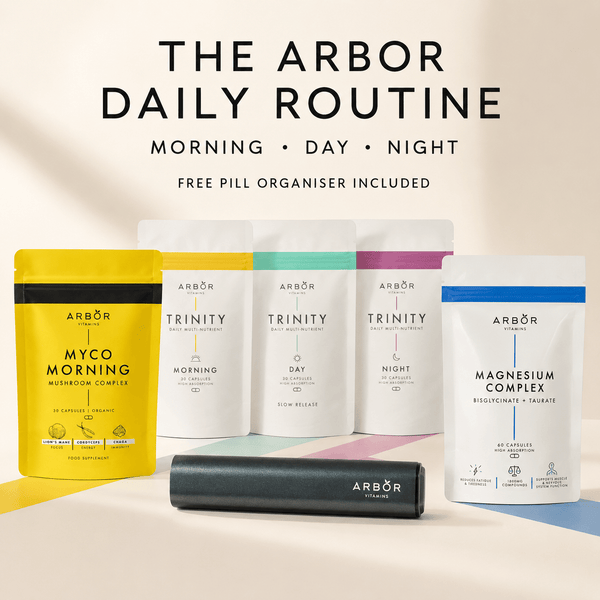
Arbor Vitamins Magnesium Complex combines:
-
Magnesium Glycinate
-
Magnesium Taurate
This pairing prioritises:
-
Bioavailability
-
Nervous system balance
-
Cardiovascular support
-
Gentle digestion
Arbor Magnesium Complex is built on magnesium glycinate and taurate, not citrate. Citrate is inexpensive and well absorbed, but its tendency to loosen the bowels makes it less suited to daily, long-term use. Each serving provides 264 mg of elemental magnesium (70% NRV), with no oxide and no synthetic fillers.
Explore the full formulation here:
👉 https://arborvitamins.com/products/arbor-vitamins-magnesium-complex-bisglycinate-taurate
FAQ: Glycinate vs Citrate
Is magnesium glycinate better than citrate?
For sleep, stress and daily use, glycinate is often preferred due to gentler digestion.
Is magnesium citrate more effective?
Citrate may be more effective for occasional constipation due to its osmotic effect.
Which magnesium absorbs best?
Chelated forms like glycinate are generally well absorbed and well tolerated.
Can I take magnesium citrate at night?
You can, but some people prefer glycinate for evening use to avoid digestive activity.
Why does Arbor Magnesium Complex include taurate as well as glycinate?
Taurate pairs magnesium with taurine, an amino acid, giving a second well-absorbed, gentle form alongside glycinate. Combining the two broadens the chelate base of the formula while keeping it easy on digestion.
Final Thoughts
Magnesium glycinate and citrate are both valid forms.
The difference lies in:
-
Digestive behaviour
-
Intended goal
-
Tolerance
If you’re looking for:
Calm.
Sleep support.
Daily nervous system balance.
Glycinate is often the more strategic choice.