Vitamin C is one of the most popular supplements in the world — but many people are surprised to learn it may have an impact on sleep, depending on when you take it and what you take it with.
Here’s everything you need to know about vitamin C and sleep, plus how timed formulas like TRINITY Multi-Nutrients prevent nighttime interference.
🧪 Does Vitamin C Affect Sleep?
Short answer:
Yes — but only indirectly and depending on timing.
Vitamin C itself is not a stimulant, but:
-
It supports energy metabolism
-
It enhances iron absorption
-
Some people experience digestive activity from vitamin C if taken at night
This means your body may feel more energised, which is the opposite of what you want before bed.
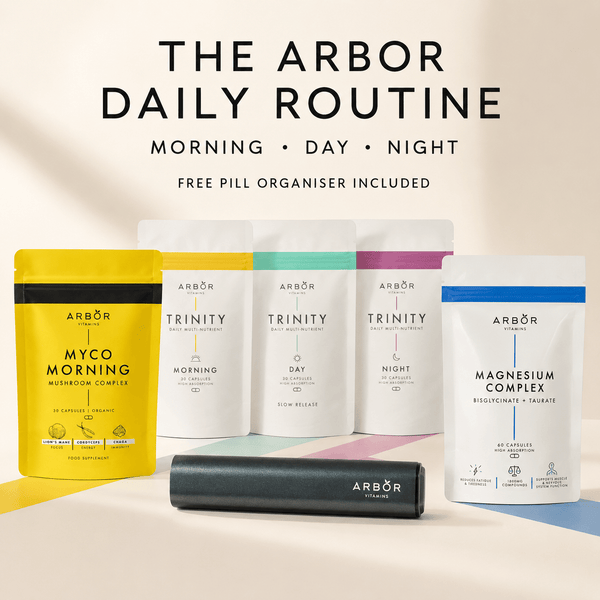
This is why TRINITY places vitamin C in the Morning Formula only — never in the evening.
🌅 Why Vitamin C Is Best Taken in the Morning
Vitamin C is involved in:
-
Neurotransmitter production
-
Energy metabolism
-
Iron absorption
-
Immune activation
These processes are naturally more active during the day.
Taking vitamin C in the morning helps:
-
Boost daytime energy
-
Improve iron uptake
-
Support immune function
-
Reduce fatigue
TRINITY pairs iron + vitamin C in the AM Formula to maximise absorption.
Learn more about TRINITY Multi-Nutrients
🌙 Should You Avoid Vitamin C at Night?
For most people, yes.
Here’s why nighttime vitamin C isn’t ideal:
1. It may increase digestive activity
This can interrupt the wind-down process.
2. It can interfere with nighttime minerals
Zinc and magnesium (common sleep-support nutrients) absorb best away from vitamin C and iron.
This is why TRINITY separates:
-
Morning: Vitamin C + iron
-
Night: Magnesium glycinate + zinc + selenium
Explore TRINITY’s Night Formula
🔄 Does Vitamin C Help Sleep in Any Way?
Indirectly, yes.
Vitamin C supports:
-
Lower oxidative stress
-
Healthy cortisol rhythms
-
Reduced inflammation
-
Immune repair
These all support better overall sleep quality, but only when taken in the correct timing (morning).
If taken too late, the energising metabolic effects can interrupt sleep.
🔥 The Ideal Timing for Vitamin C
| Time of Day | Effect | Recommended? |
|---|---|---|
| Morning | Energy metabolism, iron absorption, immune support | ✅ Best |
| Afternoon | Still effective, mild energy support | ✔ OK |
| Evening | May interfere with night-time minerals | ❌ Avoid |
| Night | Can disrupt sleep for some people | ❌ No |
TRINITY follows this exact timing pattern.
🧠 Summary
-
Vitamin C does not directly keep you awake
-
But it can indirectly affect sleep via energy metabolism
-
Best taken in the morning
-
Avoid taking it at night, especially with iron
-
TRINITY separates AM and PM nutrients to prevent sleep disruption
For effortless nutrient timing:
Explore TRINITY Multi-Nutrients
⭐ FAQs
Q: Does vitamin C interfere with sleep?
It can if taken too late in the day due to its energising metabolic effects.
Q: Can I take vitamin C at night?
It’s not recommended — take it in the morning instead.
Q: Does vitamin C keep you awake?
Not directly, but its role in energy metabolism can make some people feel more alert.
Q: Should I take vitamin C and magnesium together?
No — magnesium is best at night, vitamin C is best in the morning.
Q: Does TRINITY separate vitamin C for better sleep?
Yes — vitamin C is only in the Morning Formula, magnesium and zinc are only in the Night Formula.
Learn more